Let's be
prepared.

Nel's electrolysers produce hydrogen from water and renewable power - the starting point for synthetic fuel made close to where armed forces need it.

Fuel supply is a major defence vulnerability.

Modern armed forces run on diesel and jet fuel, delivered through long chains of refineries, pipelines, depots and trucks. Every link in that chain can be disrupted.

Even oil-producing nations are exposed. Norway refines at a single site, imports diesel, marine gas oil and jet fuel, and holds emergency stocks.

The Norwegian Defence Research Establishment (FFI) warns that fuel demand rises sharply in wartime, while domestic production may fall to sabotage or attack. A failure in fuel supply would have immediate and severe consequences for national and allied forces.

One break in the fuel supply chain Fuel from imports and a single refinery flows into one supply chain that runs to a fuel depot, a road tanker and a remote operating base. When the chain is torn at one point, everything downstream runs dry: the depot empties, the truck stops and the base goes dark.

Hydrogen unlocks fuel you can make yourself.

Synthetic diesel, jet fuel and marine fuel can be produced from hydrogen and captured CO₂, using renewable power. Electrolysis is the first step: it turns water and electricity into the hydrogen every synthetic fuel is built from.

Plants built this way can be sited close to where fuel is needed and run on local renewable power, with less reliance on imports and long supply lines. The fuel they produce can replace conventional fuel without changes to the equipment that runs on it.

Dual use by design. Emergency stocks wait for a crisis; a local plant doesn’t have to. In peacetime it can supply hydrogen and synthetic fuel to industry and transport, so it earns its keep and is already running when it counts.
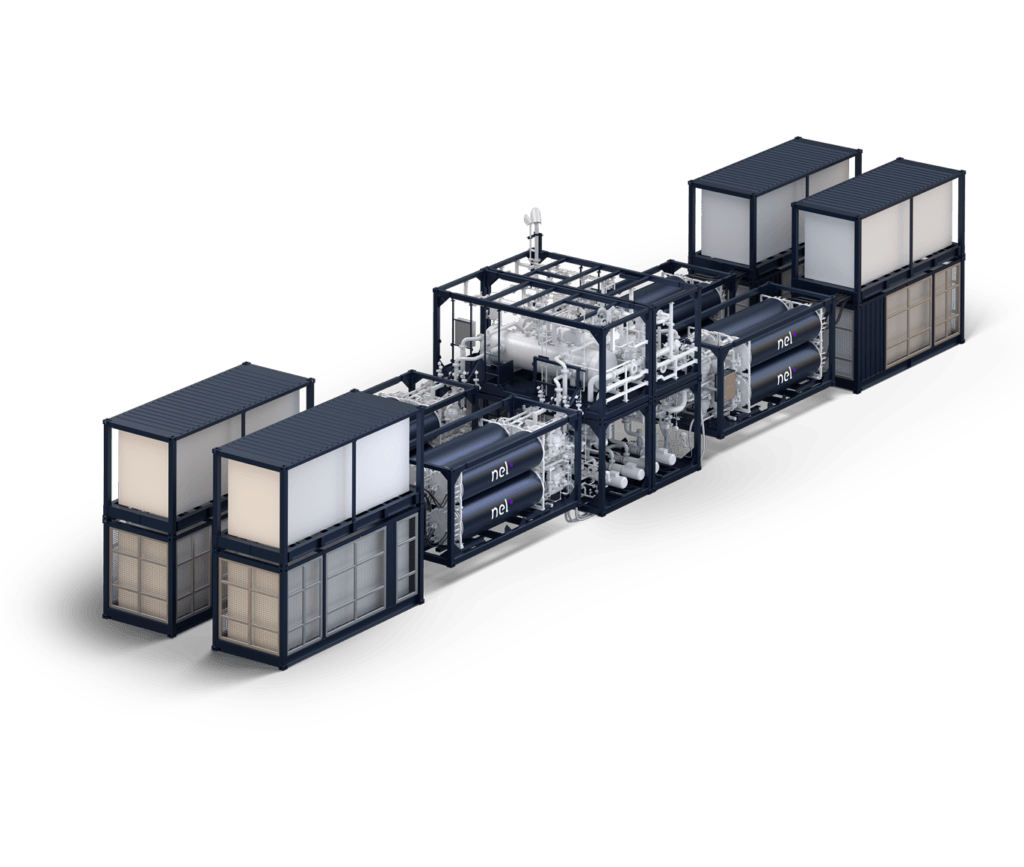
Our electrolyser technology is the foundation of sovereign fuel production.

PA Series

Pressurized Alkaline Electrolysers

  • Fuel production at scale: A single 25 MW system produces 10 tonnes of hydrogen per day, the starting point for synthetic diesel and jet fuel, in a standardized design that can be repeated across sites.
  • Faster to deploy: Modules are factory-assembled on 20ft ISO skids and tested before shipment, cutting site work and shortening project timelines.
  • Built for remote, constrained sites: Fully containerized and weather-ready, with no dedicated building required. At 100 MW in just 1,750 m², production can sit close to where fuel is needed.

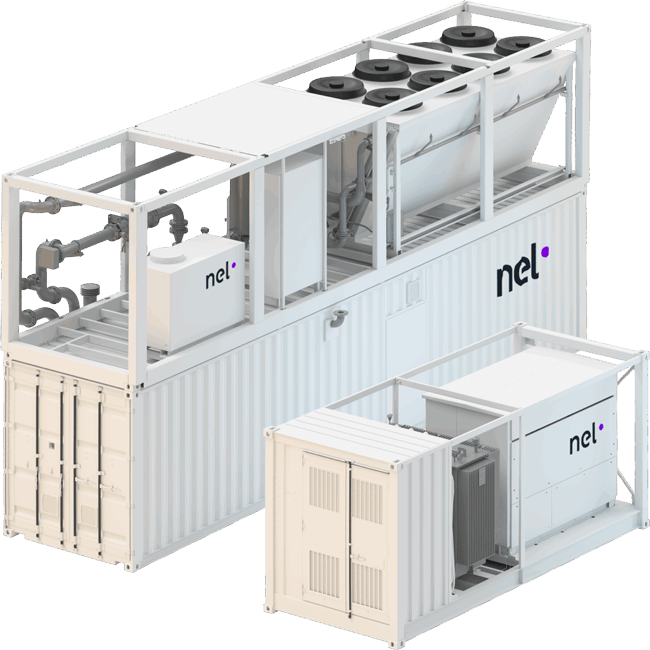
MC Series

PEM Electrolysers

  • Made for variable renewable power: PEM electrolysers respond quickly to changing loads, making them well suited to plants powered directly by wind and solar.
  • Compact and modular: Containerized PEM systems fit constrained sites and scale from a single unit to larger installations as demand grows.
  • Proven in mission-critical service: Nel PEM stacks also produce breathing oxygen for crews on US, UK and French submarines – an application where reliability is non-negotiable.

Proven technology. Trusted partner.

For many years, Nel PEM stacks have produced breathing oxygen on board submarines, supplied through Collins Aerospace for US, UK and French naval programs. When crews depend on the technology, it has to work every time.

With roots going back to 1927 and manufacturing in Norway and the United States – both NATO members – Nel brings nearly a century of electrolysis experience to defence.

As armed forces move to secure their own fuel supply, Nel is exploring with Rheinmetall how to produce synthetic fuel close to where it is needed.

Collins Aerospace

Nel PEM stacks produce oxygen for life support on submarines in US, UK and French naval programs. New orders worth about USD 20 million were booked in Q3 2026, with deliveries through 2027 and 2028.

Read more

Rheinmetall

Nel and Rheinmetall have signed a memorandum of understanding to explore decentralized renewable fuel production in Norway and other markets. The proposed cooperation combines Nel electrolysers with Rheinmetall’s Giga PtX concept to assess modular synthetic fuel solutions for defence and critical infrastructure.

Read more

US Army ERDC

Since 2022, Nel has worked with the US Army Engineer Research and Development Center (ERDC-CERL) on lower-cost PEM electrolyser stacks for hydrogen storage and energy resilience, backed by USD 11.2 million in US government funding.

Request a quote

Put a century of electrolyser expertise behind your next project.

Tell us your hydrogen production goals and one of our engineers will scope a solution built to your scale – from pilot to gigawatt.